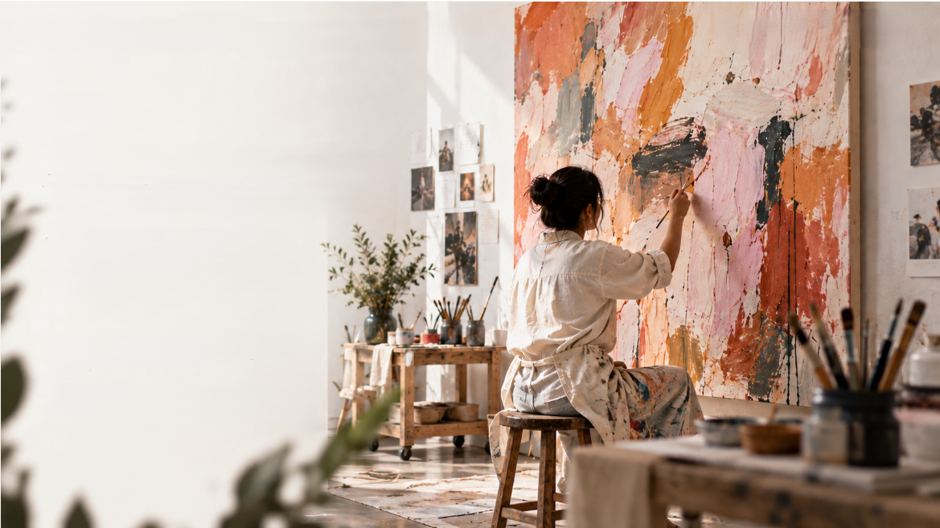
The world is painting.
We’re looking further.
Somewhere, an artist is making something remarkable. It might be taking shape in a studio you’ve never visited, in a city you’ve never considered, or through a material you’ve never seen used quite that way. The work is out there. Rasa Collective connects emerging artists and original art with collectors, designers, and spaces looking for something particular.
An artist makes
something.
You feel something.
A painting can remind you of a place you’ve never been. A sculpture can make you stop in the middle of a room. A photograph can stay with you long after you’ve walked away.
The artist may never know what you saw in it. But something has passed between you.
In Indian aesthetics, that experience has a name: rasa. Rooted in the Natya Shastra and traditions of performance and abhinaya, it speaks to the experience art evokes in its audience.
That is the idea behind our name.
— Navarasa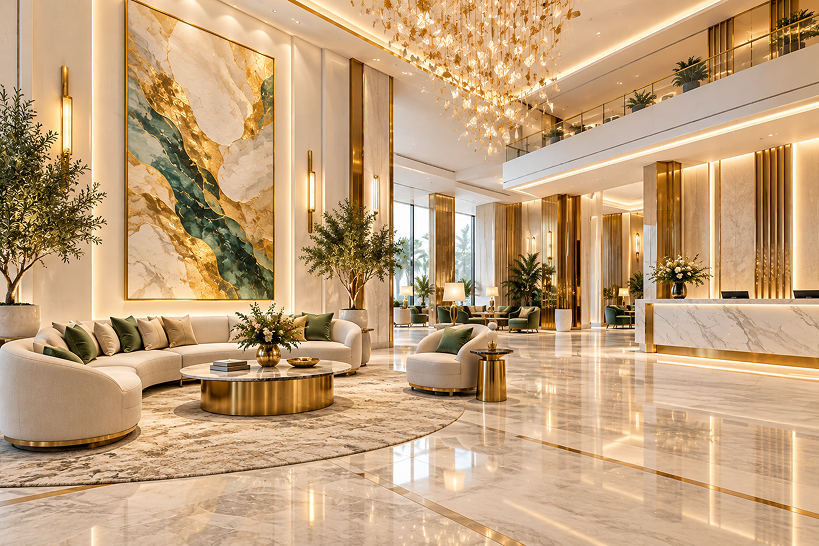
Nine rasas.
Infinite ways to express them.
Different places. Distinct perspectives.
A more meaningful tomorrow.
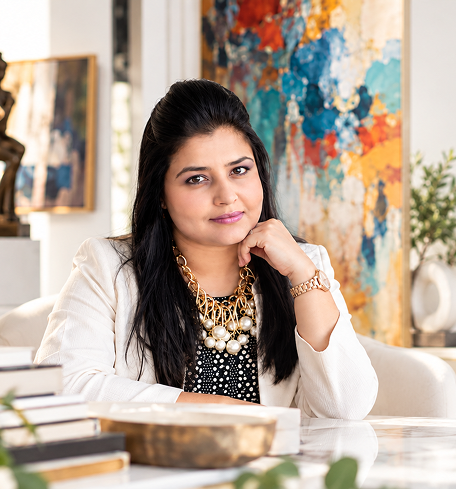
“Every brushstroke holds a world waiting to be discovered.”
Talent has never belonged to one postcode. Visibility often has.
An artist can spend years developing a practice and still remain outside the places where art is most often discovered.
Meanwhile, a collector may keep seeing the same names. A hotel may be offered work that could belong in any hotel. A designer may struggle to find something that feels right for a particular space. There is more to discover than what is already familiar.
Ragini Mittal founded Rasa to bring those worlds closer together. To look further. To make room for distinct artistic voices. And to help original work find people and places that connect with it.
Different places.
Different ways
of seeing.
A memory might become a painting. An ordinary object might become a sculpture. A question might become a photograph.
Every artist brings a different history, material, and way of looking at the world.
Rasa brings those practices into conversation, connecting artists across countries and mediums with people ready to discover their work.
We are not looking for artists who make the same kind of art. We are looking for work worth looking at more closely.
Explore ArtistsA work catches your eye.
The practice gives you more to
see.
A single image can make an introduction. But we want to understand what lies beyond it.
What is the artist exploring?How does one work relate to another?What makes their point of view their own?
That is where artist selection begins. Curation takes the conversation further. It asks how a particular work might connect with a collector, a room, a building, or an idea. We begin with the artist. Then we look for the right connection.
Different places.Distinct perspectives.
A more meaningful tomorrow.
“Curation is a conversation between the work, the artist and the world around it.”
SelectionThe practice behind the work.Point of View · Body of Work Authorship · Readiness
CurationThe context around the work.Person · Place · Purpose Scale · Artistic Fit
Every space has a story.
Every collector has a point of view.
Some people come to Rasa with a work in mind.
Others begin with an empty wall, a new property, a collection they want to build, or an idea for something that does not yet exist.
We help them discover artists and original work that speak to what they are creating.
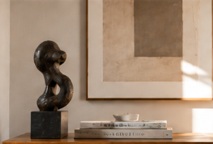 CollectorsFor the work you keep coming back to.
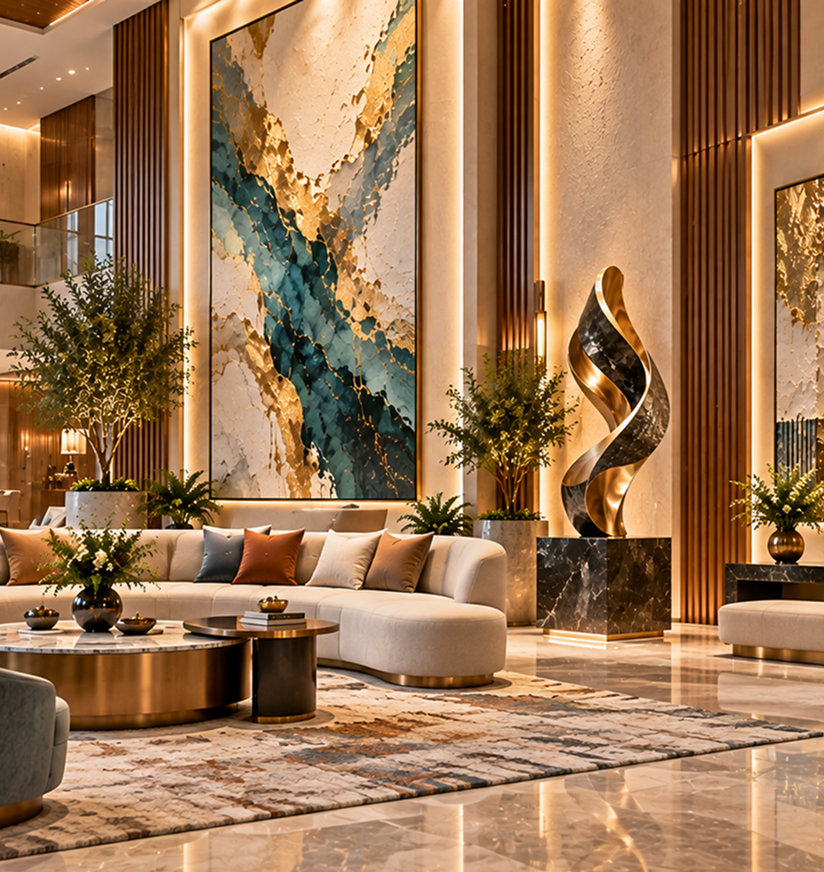
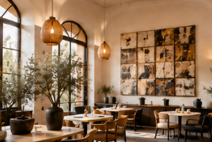 HospitalityFor art that gives a place its own identity.
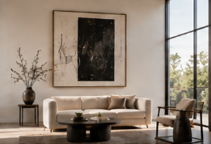 Design & ArchitectureFor work considered alongside the space.
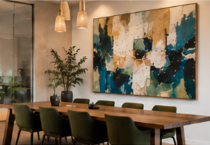 WorkplacesFor art that brings another perspective into everyday life.
Finding the work
is a beginning.
There is a moment when an artwork stops being something you are considering and becomes something you want to bring into your world.
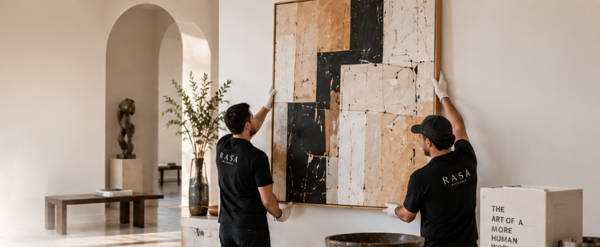
Then the practical questions begin. Is it available? What are its dimensions? What does the acquisition involve? How will it reach its destination?
For larger projects, the questions may also involve budgets, timelines, commissions, or several works across different spaces.
Art procurement brings those details together so the creative decision can move forward.
What Procurement May Involve
The story that travels with the work
An artwork has a history beyond the moment you first see it.
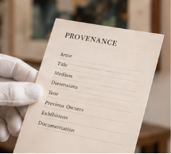
Its provenance is the record of its ownership. Invoices, inventories, correspondence, exhibition records, and physical markings may help establish that history. Records can also have gaps, which should be made clear rather than assumed away.
Knowing what is documented, and what is not, is part of understanding the work.
For each acquisition, buyers should be able to understand which artwork information and supporting documents are available.
“Art travels further with a story.”
See How Rasa Works
Somewhere, another artist is
making something you haven’t seen.
It might be the work you didn’t know you were looking for.
The world is painting. Be the first to see.